Rejecting “Flex Cracks” and “Edge Peeling”: How TENGXIANG Leather Imparts Ultimate Mechanical Flexibility to PU Leather at the Source?

In the terminal manufacturing of sofas and bags, one of the most common pain points for downstream processing plants is the appearance of fine flex cracks on PU leather after edge folding, corner wrapping, or high-frequency bending, or even direct “peeling” and delamination at the edges. Many processors mistakenly attribute this to insufficient leather adhesion, but in reality, it is a typical issue of “mechanical property mismatch” and “stress concentration.” When a relatively stiff surface layer cannot follow the large deformation of the soft substrate, cracking becomes inevitable. As a source factory deeply rooted in basic craftsmanship, TENGXIANG Leather knows that to completely solve this processing pain point, we cannot rely solely on downstream “remedies”; we must “toughen” the PU leather at the source through our ex-factory formulations and basic structures. Today, we will directly show you how TENGXIANG creates highly flexible, anti-cracking, and anti-peeling PU leather through solid basic processes.
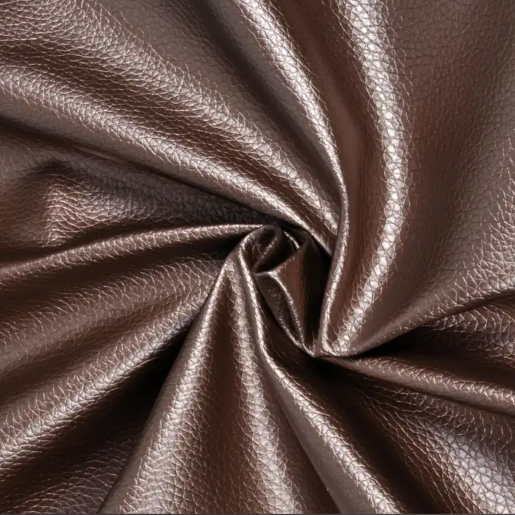
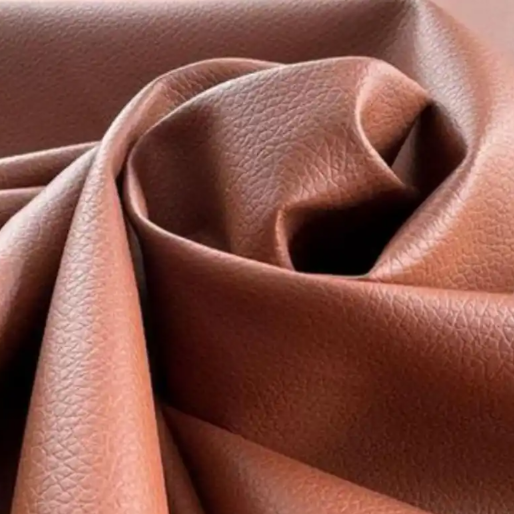
The core culprit behind flex cracks is the modulus conflict caused by a “hard surface over a soft base.” In standard dry or wet PU production, if the glass transition temperature (Tg) of the surface resin is too high, the leather will exhibit “glassy” brittleness at room or low temperatures. When bag corners are folded at 90 or even 180 degrees, the substrate is significantly stretched, while the stiff surface layer cannot extend accordingly, instantly causing it to burst and crack.
To break through this mechanical bottleneck, TENGXIANG implements precise “flexibility customization” during the basic slurry preparation stage. We abandon traditional surface formulas that blindly pursue high gloss and hardness. Instead, targeting the different deformation needs of sofas and bags, we strictly select aliphatic or specialty soft PU resins with Tg values of -20°C or lower. In the foaming layer of wet PU and the surface coating of dry PU, our technical team scientifically proportions basic plasticizers and elastic modifiers to ensure the coating itself possesses excellent elongation at break. This “soft base, soft surface” mechanical synergy created at the source allows TENGXIANG’s PU leather to naturally stretch with the substrate like skin during downstream high-frequency embossing, edge folding, and corner wrapping, fundamentally eliminating the hidden dangers of cracking and peeling caused by material brittleness.
Besides surface formulas, the basic microstructure of PU leather directly determines its flex resistance. Dry PU has a dense surface like a plastic film, which easily cracks neatly at sharp angles due to stress concentration. Wet PU presents a porous sponge-like structure with high compression and rebound; if the surface lacks elasticity, it easily develops fatigue mesh cracks.
TENGXIANG not only exercises refined control over dry and wet basic structures on the production line—such as pre-releasing surface stress through basic tumbling processes in dry PU production, and precisely controlling pore fineness and continuity in wet PU to ensure rebound buffering—but also extends this professional knowledge to “empowering” downstream clients. We know that even the best basic materials require matching processing techniques. Therefore, when delivering every batch of rolls, TENGXIANG provides highly practical processing guidance: we advise bag factories to chamfer and sand dry PU edges to eliminate “stress singularities” and use hot air to assist in softening folded edges; for wet PU, we guide sofa factories to avoid thickly applying high-viscosity hard glues, which would block the breathing and rebound functions of the pores. Through the dual approach of “premium basic rolls + pragmatic processing guidance,” we help clients significantly reduce the scrap rate of edge peeling during deep processing.
Many flex crack and peeling issues are “seasonal,” particularly severe in winter or cold environments, essentially because standard PU coatings become brittle at low temperatures. For export-oriented bags or furniture products in cold-chain transport, the low-temperature mechanical stability of the material is crucial.
In TENGXIANG’s QC laboratory, the inspection of basic physical metrics is never a mere formality. For every batch of sofa and bag PU leather coming off the line, we strictly conduct Bally flex resistance tests at both room and low temperatures. We focus not only on performance at room temperature but obsess over the flexibility retention rate under low-temperature conditions. Only when the surface and substrate remain intact after tens of thousands of repeated flexes, with absolutely no micro-cracks or signs of delamination, is the batch approved for packing and shipment. TENGXIANG does not pursue illusory “black technology”; we only believe in solid resin selection, precise formula proportioning, and strict ex-factory inspections. Contact the TENGXIANG sales team to get our latest standard high-flexibility PU swatch books and physical property reports, and let our basic quality, which stands up to repeated bending, inject lasting vitality into your end-products.

Leave A Comment

Translate »