Rejecting “Stickiness” and “Yellowing”: How TENGXIANG Leather Solves the Chemical Stability Challenges of Synthetic Leather at the Source?

In the end-use applications of synthetic leather, buyers and consumers often encounter two highly concealed and frustrating issues: after a period of use, sofa surfaces or bag handles become “sticky” with an oily feel; or white and light-colored footwear and furniture develop uneven “yellowing” and color spots locally. Many mistake this for normal “aging” or “dirt,” but in reality, it is a failure caused by the chemical instability of the material itself. As a source manufacturer with years of experience, TENGXIANG Leather knows deeply that these hidden dangers must be eradicated at the production stage. Today, we will directly explain how TENGXIANG locks in the chemical stability of synthetic leather from the source through solid basic formulations and processes.

Precisely Controlling Plasticizer Ratios to Eliminate “Migration Stickiness” at the Root
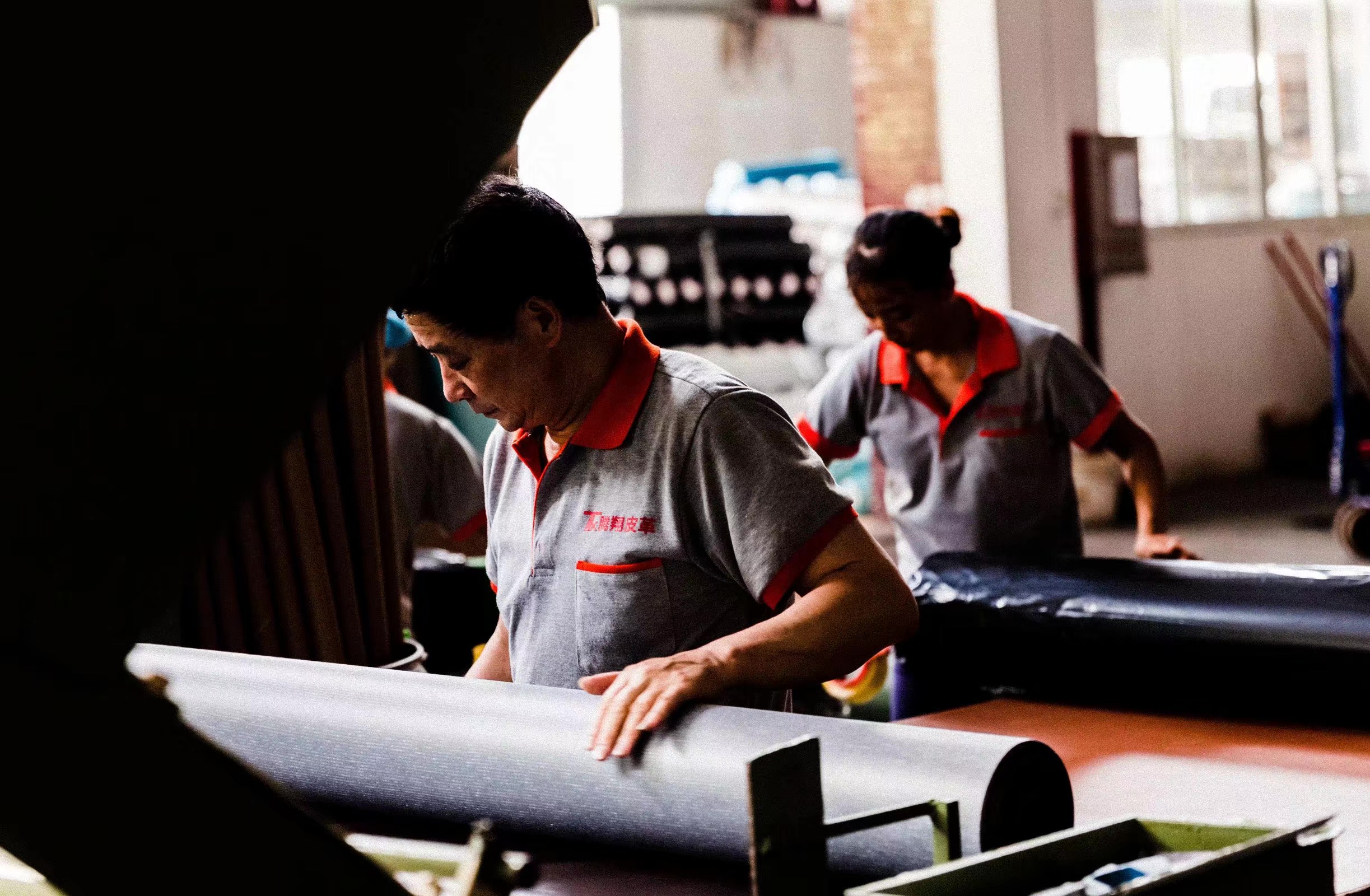
Surface stickiness, exuded oil spots, or white powdery frost are primarily caused by “plasticizer migration” from the substrate. In the production of standard PVC or semi-PU (PVC base + PU surface) synthetic leather, plasticizers are essential for softness. However, if the compatibility between the plasticizer and resin is poor, or the ratio is uncontrolled, the plasticizer will slowly migrate to the surface like “oil squeezed from a sponge.” Especially during secondary processing like gluing and laminating by downstream footwear or bag factories, solvents in the glue easily penetrate the coating, “extracting” the plasticizer from the substrate, causing severe interface stickiness and coating softening weeks later.
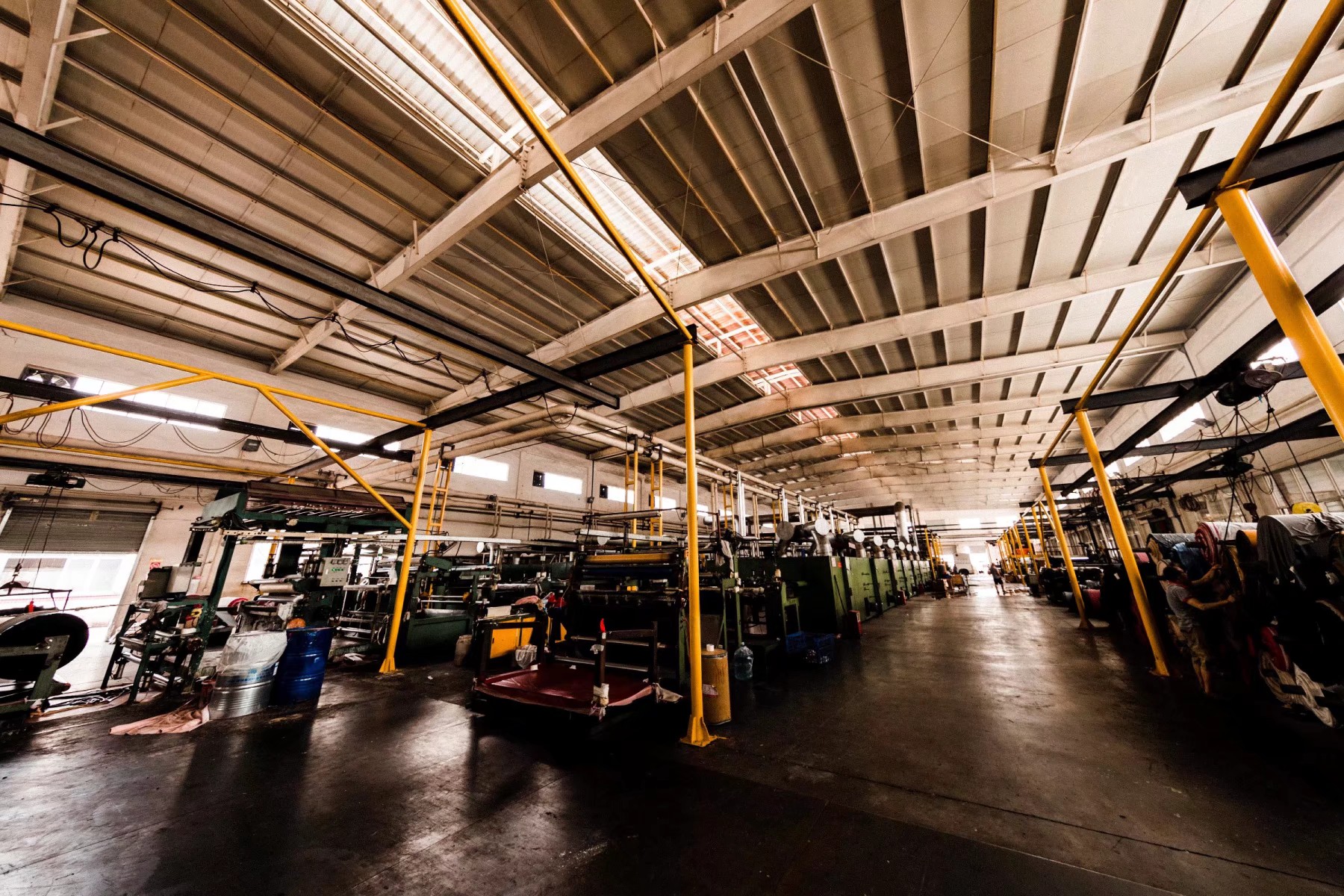
To completely solve this pain point, TENGXIANG strictly enforces precise control of basic formulations in our production workshop. We abandon cheap, easily precipitated inferior plasticizers, opting for highly compatible, eco-friendly polymer plasticizers. We scientifically set the addition ratio based on the product’s end-use (e.g., soft sofas vs. structured bags), ensuring the plasticizer is firmly “locked” within the resin network. Meanwhile, during the surface treatment stage at the end of the production line, we evenly apply a basic cross-linked surface agent. This dense “invisible barrier film” not only provides basic stain resistance and a smooth hand feel but also effectively blocks internal plasticizers from migrating outward. Furthermore, TENGXIANG clearly labels substrate attributes (pure PU, semi-PU, or pure PVC) upon shipment and provides matched glue and solvent usage recommendations, preventing the “solvent extraction stickiness” tragedy caused by downstream processing errors at the source.

Cracking the PU “Yellowing Gene” and Protecting Colors with Solid Basic Anti-aging Formulas

Besides stickiness, the “yellowing” of light-colored synthetic leather is another industry stubborn ailment. The vast majority of standard PU leather on the market uses aromatic resins (like MDI or TDI) containing benzene ring structures. This molecular structure inherently carries a “yellowing gene.” When exposed to UV light, high temperatures, or nitrogen oxides in the air, the molecular chains undergo photo-oxidative degradation, forming yellow quinone structures. This yellowing is not surface dirt but an irreversible chemical degradation. If factories do not intervene during basic production, end-products will quickly yellow overall or develop mottled spots under sunlight or long-term indoor lighting.
TENGXIANG knows the importance of color stability for furniture and footwear/bag brands. In the surface layer production of standard PU and semi-PU, we have established a pragmatic and highly efficient basic anti-yellowing defense line. First, in resin selection, we precisely match based on the client’s budget and actual application scenarios: for standard indoor furniture, we use optimized basic aromatic PU; for automotive interiors near windows or light-colored outdoor goods, we recommend aliphatic PU resins that lack benzene rings and are inherently yellowing-resistant. More importantly, in every batch of slurry preparation, TENGXIANG’s technical team adds basic UV absorbers and Hindered Amine Light Stabilizers (HALS) in sufficient, proportional amounts. These basic additives effectively absorb UV rays and capture free radicals, interrupting the photo-oxidation chain reaction. Combined with our strictly selected high-light-fastness inorganic color pastes, TENGXIANG’s light-colored synthetic leather can easily withstand long-term light exposure tests, ensuring your end-products maintain their original color on the shelf and in consumers’ homes.
Pragmatic QC Promise: Ensuring Every Roll of Leather Stands the Chemical Test of Time
The physical strength of synthetic leather determines how long it can be used, while its chemical stability determines how long it can remain “good-looking and functional.” TENGXIANG Leather does not blindly pursue flashy gimmicks but obsesses over the most basic formulation logic and ex-factory inspections. We know deeply that solving stickiness and yellowing cannot rely on end-users to “remedy” but must be “prevented” by the source factory in every basic step of batching, coating, and surface treatment.
Whether you need standard PVC bag leather with extremely high batch stability or semi-PU sofa leather requiring long-lasting, vibrant colors, TENGXIANG can provide you with mature, chemically stable basic material solutions. Contact our sales team to get the latest standard swatch books and physical property reports, and let our solid basic quality escort your end-products.

3 Comments

  • John Attack

    10 12 月, 2020 - 2:20 下午

    “ Margarita Tartakovsky, M.S. is an Associate Editor and regular contributor at Psych Central. Her Master’s degree is in clinical psychology from Texas A&M University. In addition to writing. about mental disorders, she blogs regularly about body and self-image issues on her Psych Central blog, Weightless. ”

    • Noor Mallick

      10 12 月, 2020 - 2:29 下午

      Again is there anyone who loves or pursues or desires to obtain paiits ecause it is pain, but because occasionally circumstances occur in which. Harum quidem rerum facilis est et expedita distinctio. Nam libero tempore, cum soluta nobis est eligendi optio cumque nihil impedit quo minus id quod maxime.

  • Julia Mushenko

    10 12 月, 2020 - 2:26 下午

    Harum quidem rerum facilis est et expedita distinctio. Nam libero tempore, cum soluta nobis est eligendi optio cumque nihil impedit quo minus id quod maxime but I must explain to you how all this mistaken idea of denouncing pleasure and praising pawas born and I will give you a complete account

Leave A Comment

Translate »