
When the sales department receives an order, the first step is not to throw it directly to the workshop, but to conduct a technical and delivery review. Once confirmed, the order flows to the laboratory.
Color matching is the first hurdle. Our color masters will make a small sample in the lab based on the swatch or Pantone number provided by the client. Color checking isn’t just a glance under normal lighting; it must be compared under multiple light sources in a standard color assessment cabinet (such as D65, TL84). The “color formula” will only be locked in the system as the sole standard for bulk production when the color difference is strictly controlled within the client’s acceptable range.
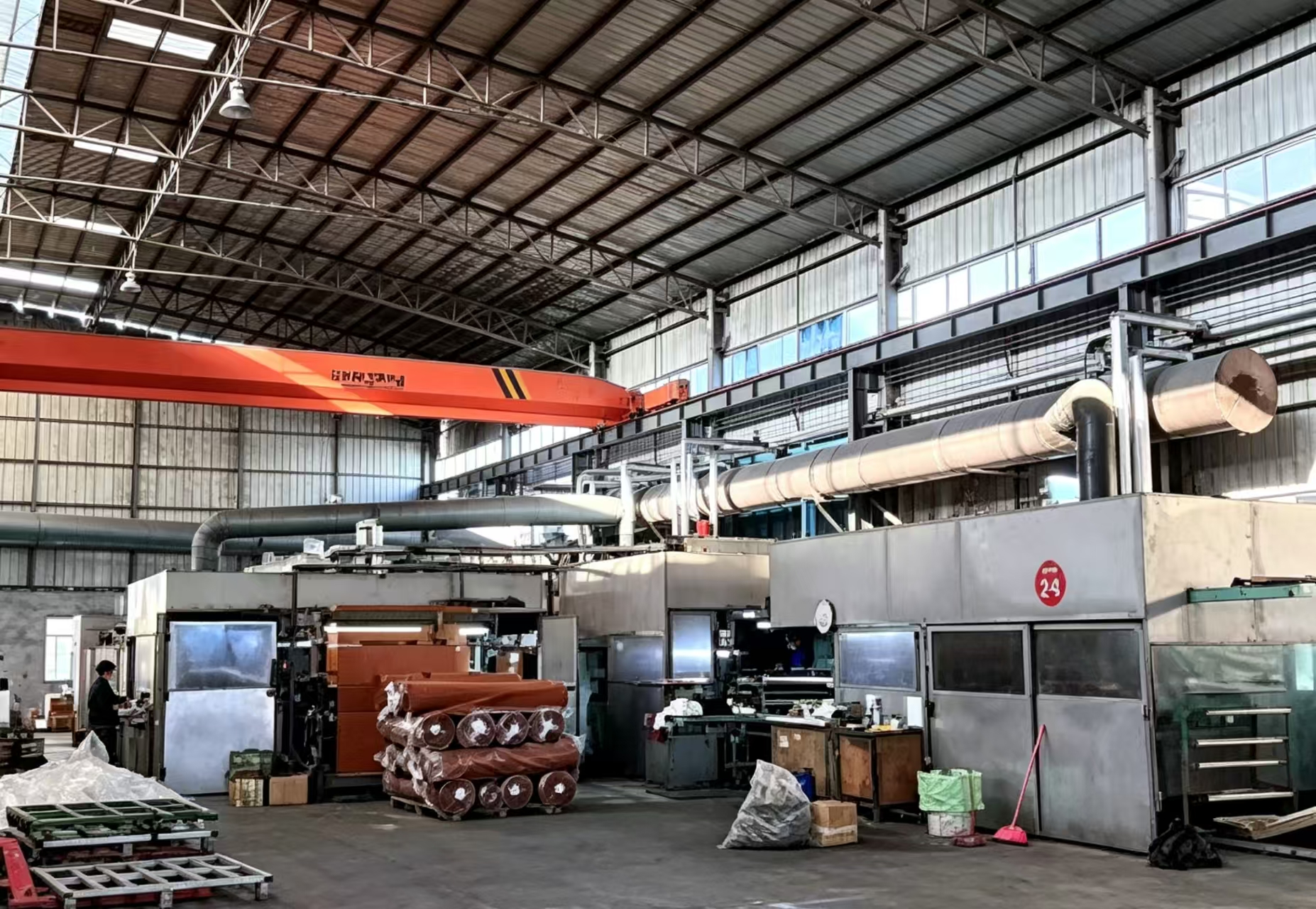
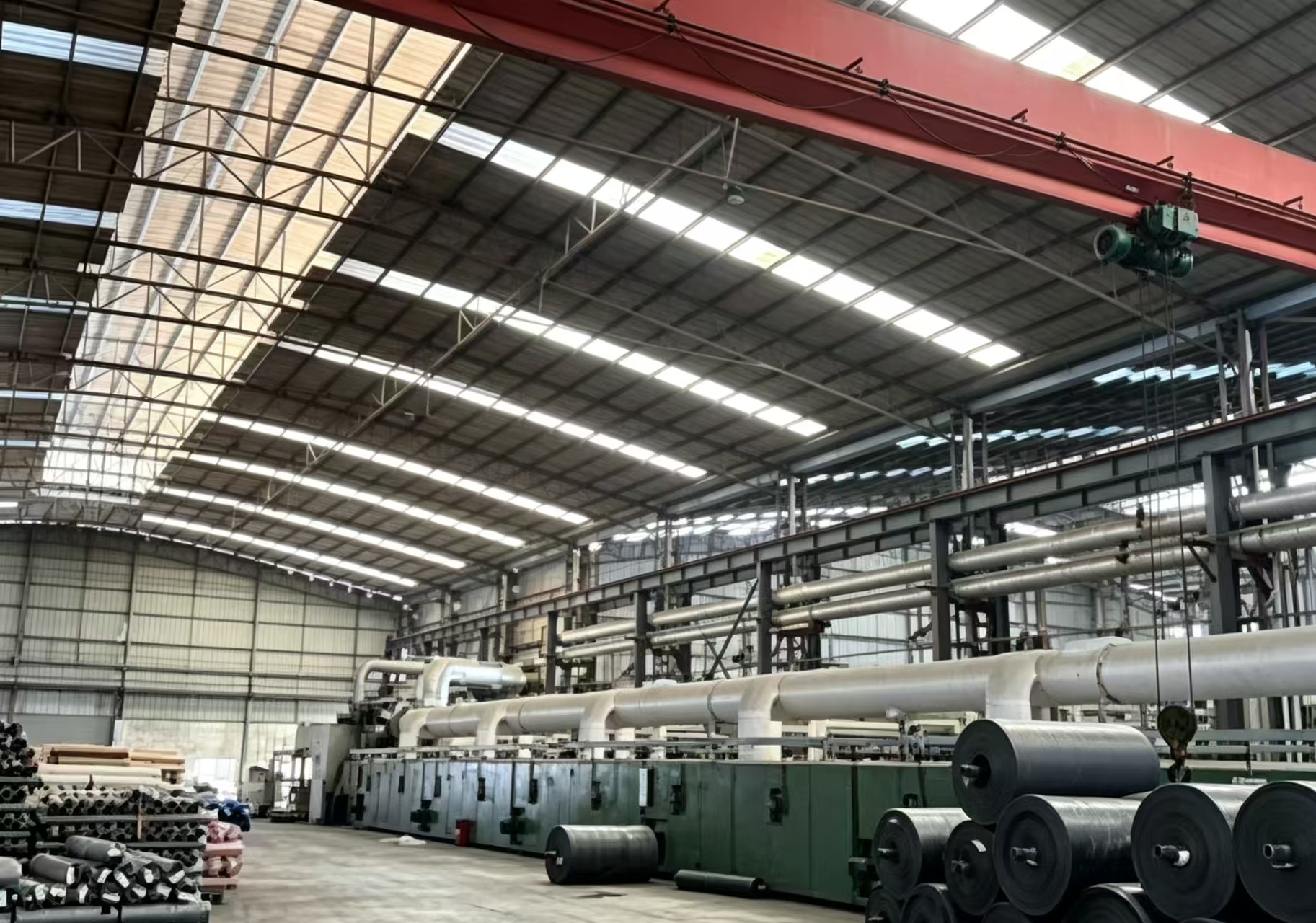
Stop 1: Unwinding — Uneven Base Fabric Leads to Endless Trouble
The first step of production is unwinding. It’s not as simple as just hanging the base fabric roll on the machine. Our unwinding operators first need to check the fabric surface for obvious snagging, holes, or weft skew. After loading, the most critical part is controlling tension and correcting deviations. If the base fabric tension is unstable, the material will wrinkle and deviate during subsequent calendering and foaming. Meanwhile, the unwinding section usually has a preheating device, allowing the base fabric to enter the next process at an appropriate temperature, ensuring a more solid lamination later.
Stop 2: Calendering — The “Hard Skills” of Obsessing Over Thickness and Lamination
This is the core of PVC/semi-PU production. The mixed PVC compound (resin, plasticizer, color powder, etc.) is fed into the calender. Several high-temperature rollers press the compound into a uniform film and tightly laminate it onto the unwound base fabric.
Here, the machine operator watches the roller temperature, speed, and gap most closely. If the gap is off by even a few hundredths of a millimeter, the thickness and GSM of the entire roll will exceed or fall short of standards. TENGXIANG’s calender operators are veterans; after starting the machine, they must frequently spot-check the thickness with a micrometer, ensuring that from the first meter to the last, the thickness tolerance is strictly locked within the client’s required range.
Stop 3: Foaming — Temperature Curves Determine Hand Feel and Rebound
The laminated semi-finished product then enters a foaming oven over a dozen meters long. The blowing agent decomposes under high temperature, causing the PVC layer to expand, giving the leather its soft hand feel, thickness, and resilience.
The foaming oven isn’t just set to a random temperature; it has multiple temperature zones. If it heats up too fast, the surface skins over while the inside hasn’t foamed; if the temperature is insufficient, the expansion ratio falls short, and the hand feel becomes stiff. Our technicians precisely set the temperature curves and belt speeds for each zone based on different product formulations. The leather coming out of the oven must not only meet thickness standards, but its rebound hand feel when pressed must also match the sample standard.
Stop 4: Surface Treatment — Putting on “Protective Gear” and Embossing Setting
The surface of the foamed leather is usually flat and lacks anti-stain and anti-scratch capabilities. The surface treatment process puts “protective gear” on it.
The material passes through the surface treatment machine, where a layer of treatment agent (such as hand feel agent, anti-stain agent, or anti-scratch agent) is evenly coated, then enters a short oven to cure. If it’s embossed leather, during this process, the material also passes through cooling rollers and embossing rollers. Hundreds of kilograms of pressure combined with specific temperatures clearly press textures like litchi or Nappa grain onto the leather surface. The uniformity of the treatment agent and the temperature control of the embossing roller directly determine the surface texture, dirt resistance, and whether the grain will fade due to later shrinkage.
Stop 5: Final Inspection — The Last “Iron Gate” Before Leaving the Factory
After cooling and setting, the leather finally arrives at the final inspection workshop. This is the last checkpoint before leaving the factory.
When the inspection machine runs, QC inspectors must keep their eyes glued to the fabric surface, picking out any defects like color difference, scratches, dirt, or uneven foaming, and sticking arrow labels on them. Meanwhile, the thickness gauge and meter counter on the machine record the thickness data and actual yardage of each roll in real-time, never shortchanging on length. Qualified leather is neatly rolled, covered with a moisture-proof bag, and labeled with an outer box tag containing the batch number, color, texture, yardage, and production date. At TENGXIANG, every roll of leather leaving the warehouse can be traced back to the exact day, shift, and machine it was produced on via the batch number on the label.
Conclusion: Delivering Certainty to Clients
Many peers think that since profit margins for basic materials are thin, there’s no need to be so meticulous in the process. But TENGXIANG believes that it is precisely these seemingly tedious “obsessions” that exchange for the stability of bulk production. We are not afraid of clients looking at our production line because we believe a transparent process is the best quality endorsement in itself.
If you are looking for a synthetic leather source factory with stable delivery and bulk that matches samples, welcome to contact TENGXIANG. We can arrange an online video factory audit for you at any time or send our latest batch of A4 sample cards, letting you personally inspect our results.”